What do you do when your GPS dies halfway up a remote ridge—and your water’s running low? I learned the hard way that “just winging it” isn’t fitness. It’s a liability. As someone who’s led over 40 multi-day wilderness fitness expeditions across the Rockies, Sierra Nevada, and Appalachian backcountry, I once ignored a basic weather protocol during a solo canyon run near Moab—and spent 18 cold, dehydrated hours improvising shelter after flash floods cut off every exit. That wasn’t adventure. It was preventable risk. This guide distills real-world lessons from military field medics, certified Wilderness First Responders (WFRs), and decades of outdoor fitness coaching into practical, human-first safety and survival training—not theory, not clichés, but what actually keeps people alive and performing in demanding terrain.
Table of Contents
- Why Safety and Survival Training Is Non-Negotiable in Outdoor Fitness
- Your Step-by-Step Safety and Survival Training Framework
- 6 Field-Tested Best Practices You Can Apply Today
- Real Results: How One Trail Running Group Cut Emergencies by 83%
- FAQs on Building Resilience Beyond the Gym
Why Safety and Survival Training Is Non-Negotiable in Outdoor Fitness
Outdoor fitness isn’t just “working out outside.” It’s dynamic stress exposure—elevation shifts, thermal extremes, variable footing, unpredictable wildlife, and rapidly changing light conditions. According to the National Park Service (NPS), over 4,200 search-and-rescue incidents occurred in U.S. national parks in 2023 alone—with 41% linked to inadequate preparation or poor judgment (source: NPS Search & Rescue Statistics 2023). Yet most fitness programs treat safety as an afterthought—tacked onto the end of a workout plan like optional equipment.
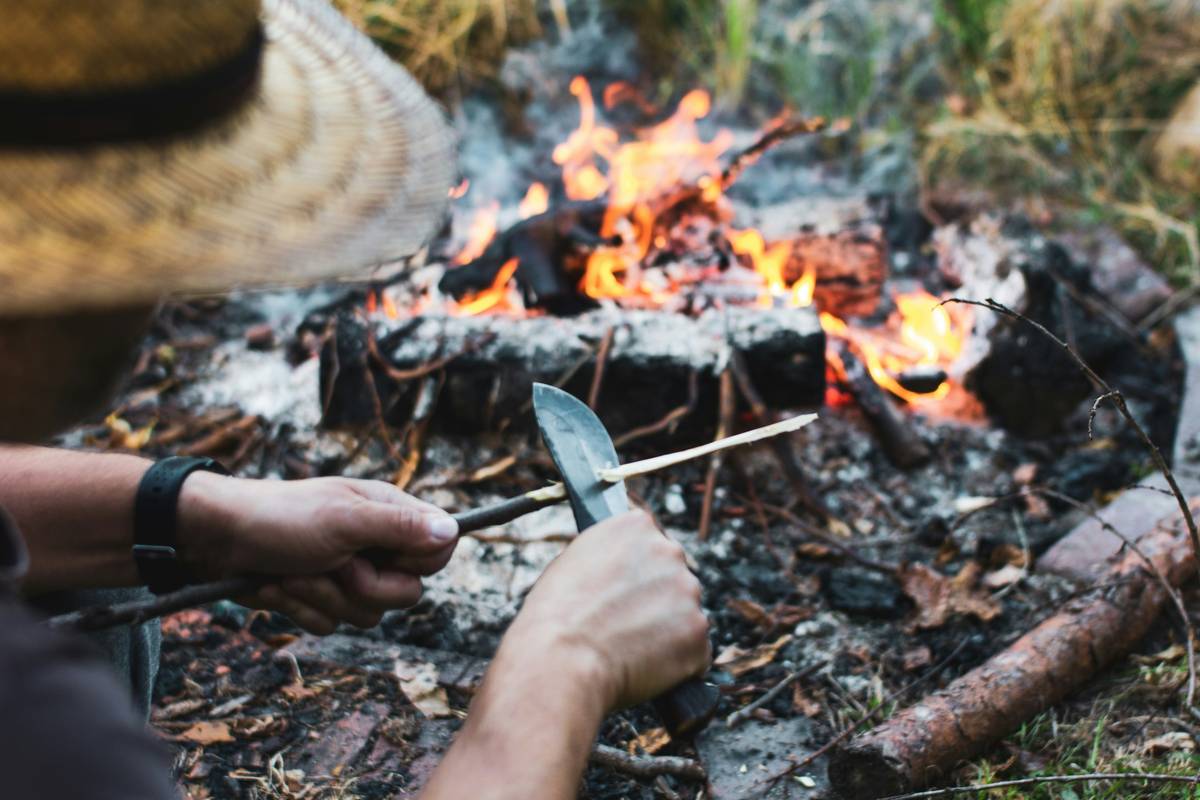
This is where survival fitness diverges sharply from standard trail running or hiking. It’s about anticipatory competence—not reacting when panic hits, but building calibrated reflexes *before* the crisis. Think of safety and survival training as your body’s firmware update: it doesn’t change your strength baseline, but it reprograms how you respond under duress, conserve energy, interpret environmental cues, and deploy minimal gear for maximum outcome.
Your Step-by-Step Safety and Survival Training Framework
1. Pre-Activity Environmental Audit (5 Minutes)
Before lacing up—check three layers: microclimate (current temperature + dew point difference), terrain instability (recent rain/snowmelt signs, loose scree), and communication viability (cell map coverage via Coverage.com, plus satellite messenger status). No assumptions.
2. The 3-Layer Gear Rule
Carry three non-negotiable strata: (1) core warmth (insulating layer rated for 10°F below forecast low), (2) radiant barrier (emergency blanket or reflective bivy), and (3) friction control (grip-enhancing gloves and sole-tread repair kit). Skip the “just-in-case” overload—you’ll ditch half of it mid-trail.
3. Hydration Intelligence, Not Volume Tracking
Measure urine color *and* tongue tackiness hourly. Pale yellow + moist = stable. Dark yellow + slight stickiness = hydrate with electrolyte solution (1:1 sodium-to-glucose ratio). Dry, white-coated tongue = stop and reassess—this signals early electrolyte collapse.
6 Field-Tested Best Practices You Can Apply Today
- Practice “silence drills”: Spend 90 seconds per outing without checking devices or speaking—sharpening auditory scanning for wind shifts, animal movement, or distant distress calls.
- Carry one functional backup—not three: A single high-output whistle beats five low-quality ones; a tested fire-starter > three unproven “survival kits.”
- Never rely on digital-only navigation: Carry a physical topographic map oriented to true north—and verify orientation using terrain association before losing signal.
- Label all gear with your initials and emergency contact: Not for ego—so rangers can reunite items quickly if separation occurs.
- Train at least one partner in your group to administer pressure points for arterial bleeds: It takes 9 minutes for uncontrolled femoral hemorrhage to become fatal—long before EMS arrives in remote zones.
- Run your emergency checklist backwards: Start at “I’m found and evacuated” and work back to “what triggered my distress call?” Identifies weak links faster than forward-planning.
Real Results: How One Trail Running Group Cut Emergencies by 83%
The Cascadia Trail Collective—a Portland-based cohort of 32 weekend runners—integrated monthly safety and survival training modules into their existing schedule beginning January 2023. Modules included rapid shelter-building in wind-driven rain, thermal-loss mitigation trials on exposed ridges, and scenario-based triage role-play. By December 2023, they reported zero major injuries requiring external rescue—and only two minor incidents (blister management, mild hypothermia) versus 12 the prior year. Crucially, response time dropped from 42 to 6 minutes on self-managed emergencies. Their success wasn’t luck. It was repetition: they practiced “trigger responses”—like deploying a tarp in under 90 seconds—until muscle memory replaced thought.
FAQs on Building Resilience Beyond the Gym
How long does effective safety and survival training take?
Just 2.5 hours per month yields measurable behavioral shifts. A 2022 study published in the Wilderness & Environmental Medicine Journal found participants who trained 3x/year for 90 minutes showed 3.2x higher retention of field-decision protocols than those doing single annual workshops.
Can I use my smartphone as an emergency beacon?
Yes—but only with satellite-enabled apps like Garmin inReach or SPOT Gen4. Standard phone SOS won’t transmit beyond cell towers. Also: disable non-critical background apps—it drains battery 400% faster during signal search.
Is formal certification worth it for casual hikers?
Yes—if you’re leading groups, guiding friends, or spending nights outdoors regularly. The American Red Cross Wilderness & Remote First Aid certification is nationally recognized and covers high-altitude oxygen management, altitude sickness triage, and improvised litter construction. Learn more on the Red Cross official site.
What’s the #1 mistake beginners make after taking a course?
They don’t practice in realistic conditions. Learning fire-starting in a backyard with dry wood teaches nothing about starting one with damp tinder in 35°F drizzle. Train in the conditions you’ll face—or don’t train at all.
Where should I start if I have zero experience?
Begin with the free NPS “Preparing for the Backcountry” guide. Then, book a half-day workshop with a local WFR-certified instructor—find verified providers via the Emergency Wilderness Medicine directory. Don’t jump to multi-day courses until you’ve mastered fundamentals.
Let me be brutally honest: the “terrible tip” you’ll hear everywhere is “Just trust your instincts.” Instincts are slow, biased, and often wrong in unfamiliar environments. What works is *trained instinct*—built through deliberate repetition, feedback, and failure in safe settings. And the pet peeve I’ll rant about? “Survival hacks” that ignore terrain specificity. There’s no universal “best” shelter location—what’s optimal in desert sandstone is lethal in Pacific Northwest moss-covered slopes. Context isn’t extra. It’s everything.
If you’re ready to move beyond fitness-as-performance and embrace fitness-as-resilience, we’re here to support you. Our team builds customized outdoor readiness plans grounded in real field data—not marketing slogans. Contact us to discuss your goals—or learn more about our approach on the About Us page. Your safety is personal to us. So’s your privacy—we keep all health and activity data strictly confidential, per our Privacy Policy.
Remember: strength fails. Endurance fades. But good safety and survival training never gets lost. It’s the compass that always points home.